Power Grid Model

Power Grid Model logo

High-performance library for distribution power system analysis.

Power Grid Model is a high-performance Python/C++ library for steady-state distribution power system analysis.

The global energy transition is placing new and unprecedented demands on Distribution System Operators (DSOs) and grid providers. Alongside upgrades to grid capacity, processes such as digitization, capacity optimization, and congestion management are becoming vital for delivering reliable services.

Project Lifecycle Stage
Incubation

Project Special Interest Group
Grid Simulation and Modeling

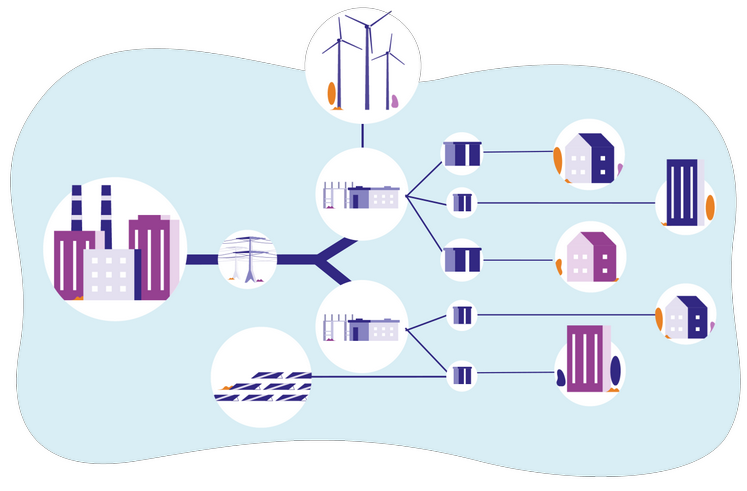
Power Grid Model provides a calculation engine that is increasingly essential for operators in this new environment. It offers a standards-based foundation enabling real-time power systems analysis, simulations of electrical power grids, and sophisticated what-if analysis. In addition, it enables in-depth studies and analysis of the electrical power grid’s behavior and performance. This comprehensive model incorporates essential factors such as power generation capacity, electrical losses, voltage levels, power flows, and system stability.

 

Power Grid Model is currently being applied in a wide variety of use cases, including grid planning, expansion, reliability, and congestion studies. It can also help in analyzing the impact of renewable energy integration, assessing the effects of disturbances or faults, and developing strategies for grid control and optimization.

Power Grid Model offers an independent open technology base that speeds and simplifies development of critical Power System technologies for DSO’s and related organizations.

Power Grid Model Benefits

Open Source Business Benefits

  • Reduced project time and cost leveraging with field-proven Open Source components
  • Rapid, relevant and ongoing innovation through open, community-driven development
  • Shared community learning and best practice

Technical Benefits

  • Standards-based speeding development, implementation and integration with broader systems
  • Unrivalled performance through efficient C++ implementation, native shared memory multi-threading and support for parallel computing
  • Ensured accuracy with integrated unit testing and validation test
  • Optimized algorithms to capture the true characteristics of the distribution grid
  • Full support of three-phase asymmetric calculation
Features

  • Power system calculation functionalities: power flow, state estimation, short circuit
  • Linear methods available
  • Symmetric and asymmetric calculation
  • High-performance implementation in C++ with native parallelization
  • API (Application Programming Interface) in Python and C
  • Cross-platform

Open Source Community

Hosted by the Linux Foundation Energy, The Power Grid Model is now a vibrant Open Source project with a diverse, active and growing community, consisting of DSO’s, universities, research institutes and commercial parties.

The project is constantly evolving through a vibrant community-driven development process, with future scope to extend the existing libraries and develop more complete open-source applications. As part of this secure ongoing development, continuous validation is conducted through a CI pipeline in GitHub Actions.

Through the community, field validation of the library has been performed against the Power Grid Model reference models in over 80 test cases.

Architecture

The project consists of two main libraries: power-grid-model and power-grid-model-io.

power-grid-model

The core power-grid-model library is the main calculation engine, optimized for speed, to support real-time modelling, machine learning and powerful predictive analytics. Written in highly efficient C++, the library also offers native shared-memory multi-threading to enable parallelization in batch calculations.

A choice of C-API (with dynamic shared object) and a user-friendly Python API offers flexibility for developers. While the library runs across platforms including Windows (x64), Linux (x64/arm64), and macOS (x64/arm64), and publishes binary Python packages in official PyPI.

The calculation core is a C++ header only library. This is wrapped by a C-API providing direct access with dynamic shared object support for C-API developers. The C-API is then wrapped into a Python API to provide a more user-friendly option for Python developers.

The calculation core is thoroughly tested by its own unit tests and validation tests. While the model can also be validated on the Python side with the same test data.

More in-depth information on Power Grid Model can be found here: https://power-grid-model.readthedocs.io/en/stable/.

power-grid-model-io

The power-grid-model-io library is a data conversion Python library to speed and simplify integration of Power Grid Model into broader system environments. This handles the conversion between the Power Grid Model format and other common grid data formats, with current support for conversion from Vision and pandapower.

More in-depth information on the data conversion library can be found here: https://power-grid-model-io.readthedocs.io/en/stable.

power-grid-model-ds

The power-grid-model-ds library extends the core Power Grid Model calculation engine with a high-level, Pythonic modelling and simulation interface for data-science applications. It defines a Grid dataclass that manages the consistency of the entire network and enables seamless integration of advanced analyses, such as network topology exploration, path and cycle detection, and connected-component checks, directly within data-science workflows. Built on the same performant C++ core as Power Grid Model, PGM-DS exposes essential power-system calculations (power flow, state estimation, short-circuit) through a lightweight Python API, allowing for large-scale batch simulations and rapid prototyping of grid-optimization algorithms.

Key Features:

  • Dual Representations, manages both graph- and array-based views of the network, making it easy to switch between topological analyses (e.g., cycle detection, pathfinding) and vectorized computations.
  • High-Performance Simulation, leverages the PGM C++ calculation core via a Python wrapper to run simulation-intensive tasks.
  • Data Science Integration, designed for batch experimentation, enabling millions of scenario simulations for grid planning, load-forecasting, and reliability studies over multi-year horizons.

Integration and LF Energy Power Grid Suite

Power Grid Model offers a powerful stand-alone calculation engine. Using power-grid-model-io, it can be easily integrated into any broader systems architecture, with out-of-the-box integration modules for Vision and pandapower.

For organizations looking at building full active congestion management systems, Power Grid Model now forms part of a more comprehensive open source tool suite hosted by LF Energy.

Used together, the suite enables DSOs to create end-to-end smart energy software platforms stretching from capacity forecasting, through advanced modelling and calculation, through to intelligent grid-edge mitigation and the implementation of reactive market pricing for steering supply and demand.

The LF Energy Power Grid Suite also incorporates:

OpenSTEF

OpenSTEF uses machine learning for accurate short term forecasting grid load and generation: based on measurements, weather forecasts, pricing on the energy market and other determining metrics.

Shapeshifter offers a framework and libraries for building Smart Energy trading platforms based on the Universal Flex Trading Protocol (UFTP).

Power Grid Model Use Cases

  • Power Grid Model is used by existing DSOs to generate simulations of different potential grid expansion plans in profile calculations over future decades.
  • Monte-Carlo: Local operators are using Power Grid Model to simulate different scenarios for low voltage (LV) grid requirements in the coming decades. Simulations are based on different forecasts for the market penetration of electric vehicles and photovoltaics, and are used to identify potential bottlenecks within LV grids.
  • Other current use cases include real-time what-if analysis including impact analysis of component failure and other anomalies on the current grid state.
  • Alliander’s Delvi Project Leverages LF Energy Power Grid Model to Direct Overhaul of Low Voltage Grid

Resources

Collaboration

Integration

Related Posts

LF Energy Welcomes New Members, Launches Three Projects, and Advances Open Source Grid Technology Across the Portfolio

LF Energy welcomes new members AZX, EcoPhi, and Empa; launches the AINETUS, URPX, and CUPID projects; advances Power Grid Model to Early Adoption; and highlights a TenneT case study demonstrating a 10x performance improvement using PowSyBl. Recent releases across EVerest, OperatorFabric, FlexMeasures, and other projects underscore continued momentum across the LF Energy ecosystem.

Power Grid Model DS: Simplifying Data Science for Distribution System Analysis

Summary Signal: Presented at the LF Energy Summit Europe 2025: At the Summit, Peter Salemink and Jaap Schouten from Alliander introduced Power Grid Model DS, a new open source toolkit designed to simplify data science workflows for distribution system analysis. Developed within Alliander and now contributed to the LF Energy ecosystem, the project bridges the…

Open-Source Congestion Management: Future-Proofing Solutions for the Energy Grid

TL;DR (Dateline: October 2025 – LF Energy Summit) At the 2025 LF Energy Summit, experts from Accenture and Artelys — including Jannis Kahlen (Accenture, Netherlands), Nicolas Omont (Artelys, France), Gladys Leon (Artelys España Soluciones Analíticas S.L., Spain), and Jordanno de Assuncao Paiva (Accenture, Germany) — presented the session “Open-Source Congestion Management: Future-Proofing Solutions for the…

LF Energy Power Grid Model v1.12.0 Released: Enhanced State Estimation and Improved Observability

LF Energy is pleased to announce the release of Power Grid Model v1.12.0, the latest version of our high-performance, open source library for power system analysis and simulation. This release delivers significant enhancements to state estimation, improved documentation, critical bug fixes, and a number of internal optimizations that improve performance and maintainability. 🚀 Key Highlights…
The 6th Power Grid Model Meetup – Our First Full-Day Event and a Growing Community 

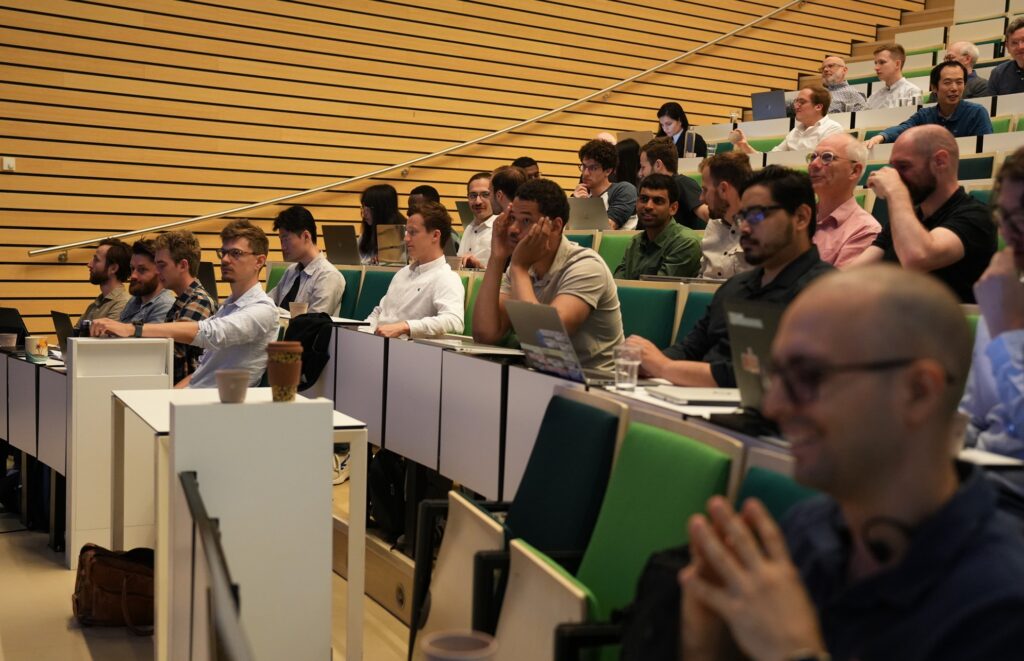
On 16 May 2025, the LF Energy Power Grid Model (PGM) community gathered at Delft University of Technology for the first-ever full-day meetup. With 80+ participants joining both in person and online, the event combined hands-on technical workshops, an interactive hackathon session with four collaborative projects, and a vibrant afternoon of presentations and networking.  The…

Power Grid Model v1.11.x Adds Support for Asymmetric Lines and Improved Power Flow Calculations

The LF Energy Power Grid Model maintainers are excited to announce the v1.11.x release series of Power Grid Model, including support for asymmetric lines and more extensive support for power flow calculations with automatic tap regulation. Highlights  Added support for asymmetric lines (see #720 and the documentation).  Added support for power flow calculations with automatic tap regulation with…

Linux Foundation Energy Announces its First US Investor Owned Utility Member, Research into AI for Energy Systems, and Dates for LF Energy Summit

Other recent momentum includes a new open source project for power system optimization and case studies demonstrating real world impact of open source on energy systems SAN FRANCISCO, CA – April 22, 2025 – LF Energy, the open source foundation focused on harnessing the power of collaborative open technologies and standards to accelerate the energy…

Related Videos

The global energy transition is placing new and unprecedented demands on Distribution System Operators (DSOs). Alongside upgrades to grid capacity, processes such as digitization, capacity optimization, and congestion management are becoming vital for delivering reliable services.

Power Grid Model is an open source project from Linux Foundation Energy and provides a calculation engine that is increasingly essential for DSOs. It offers a standards-based foundation enabling real-time power systems analysis, simulations of electrical power grids, and sophisticated what-if analysis. In addition, it enables in-depth studies and analysis of the electrical power grid’s behavior and performance. This comprehensive model incorporates essential factors such as power generation capacity, electrical losses, voltage levels, power flows, and system stability.

Power Grid Model is currently being applied in a wide variety of use cases, including grid planning, expansion, reliability, and congestion studies. It can also help in analyzing the impact of renewable energy integration, assessing the effects of disturbances or faults, and developing strategies for grid control and optimization.

00:00 Opening remarks (morning), Peter Salemink (Alliander)

00:06:44 Highlights PGM, PGM Maintainers (Alliander)

00:25:41 Roadmap PGM, PGM Maintainers (Alliander)

00:37:32 Highlights PGM-DS, PGM Maintainers (Alliander)

01:04:11 Roadmap PGM-DS, PGM Maintainers (Alliander)

01:08:47 How to contribute, PGM Maintainers (Alliander)

01:16:52 Forward looking bottom-up grid state forecasting and optimization using plug and play software stack​, Ankur Arohi (Emsys)

01:47:09 Opening remarks (afternoon), Peter Salemink (Alliander)

01:52:06 Keynote : Powering the Energy Transition: Different Pieces, One Shared Puzzle​, Martijn Govers (Bright Cubes)

02:40:41 Use case: PEANUT for Tactical Capacity Management: a Power Grid Model implementation ​, Francisca Mestre (Alliander)

03:13:47 Use case: PV Nodes in PGM Power Flow – Theory and Scenario-Based Demonstrations ​, Udo Schmitz & Eduard Fried (SOPTIM)

03:41:24 Digital Twin LS Flex model, Willemijn Brus (DEP/Alliander)

03:48:37 Power Grid Model meets DOTS Co-Simulations, Leo van Schooten (TU/e)

03:54:47 KOPR: An AI Digital Twin Deployed Nationwide in Luxembourg for Smart Grid Operations, Cyril Cecchinel (DataThings)

04:03:17 How to best lift transmission constraints, Wander Wadman (Alliander)

04:09:01 Closing remarks, Peter Salemink (Alliander) 4:14:31

The global energy transition is placing new and unprecedented demands on Distribution System Operators (DSOs). Alongside upgrades to grid capacity, processes such as digitization, capacity optimization, and congestion management are becoming vital for delivering reliable services.

Power Grid Model is an open source project from Linux Foundation Energy and provides a calculation engine that is increasingly essential for DSOs. It offers a standards-based foundation enabling real-time power systems analysis, simulations of electrical power grids, and sophisticated what-if analysis. In addition, it enables in-depth studies and analysis of the electrical power grid’s behavior and performance. This comprehensive model incorporates essential factors such as power generation capacity, electrical losses, voltage levels, power flows, and system stability.

Power Grid Model is currently being applied in a wide variety of use cases, including grid planning, expansion, reliability, and congestion studies. It can also help in analyzing the impact of renewable energy integration, assessing the effects of disturbances or faults, and developing strategies for grid control and optimization.

00:00 Opening remarks (morning), Peter Salemink (Alliander)

00:06:44 Highlights PGM, PGM Maintainers (Alliander)

00:25:41 Roadmap PGM, PGM Maintainers (Alliander)

00:37:32 Highlights PGM-DS, PGM Maintainers (Alliander)

01:04:11 Roadmap PGM-DS, PGM Maintainers (Alliander)

01:08:47 How to contribute, PGM Maintainers (Alliander)

01:16:52 Forward looking bottom-up grid state forecasting and optimization using plug and play software stack​, Ankur Arohi (Emsys)

01:47:09 Opening remarks (afternoon), Peter Salemink (Alliander)

01:52:06 Keynote : Powering the Energy Transition: Different Pieces, One Shared Puzzle​, Martijn Govers (Bright Cubes)

02:40:41 Use case: PEANUT for Tactical Capacity Management: a Power Grid Model implementation ​, Francisca Mestre (Alliander)

03:13:47 Use case: PV Nodes in PGM Power Flow – Theory and Scenario-Based Demonstrations ​, Udo Schmitz & Eduard Fried (SOPTIM)

03:41:24 Digital Twin LS Flex model, Willemijn Brus (DEP/Alliander)

03:48:37 Power Grid Model meets DOTS Co-Simulations, Leo van Schooten (TU/e)

03:54:47 KOPR: An AI Digital Twin Deployed Nationwide in Luxembourg for Smart Grid Operations, Cyril Cecchinel (DataThings)

04:03:17 How to best lift transmission constraints, Wander Wadman (Alliander)

04:09:01 Closing remarks, Peter Salemink (Alliander)

YouTube Video UExLeUZmMUo5WGtwdVN4UGVmZ2Ywd01TVnZMLUI0cTd1LS41QTY1Q0UxMTVCODczNThE

7th Power Grid Model Meetup - 2026

June 4, 2026 9:51 am

Agenda:
-Welcome

-PGM-DS workshop: Join us for an interactive, hands-on session where you'll solve a real-world problem using the PGM-DS project. This session is designed to showcase the versatility and user-friendliness of PGM-DS. You'll work with a realistic use case, utilizing dummy data to explore the full capabilities of the project in a practical, engaging way.

-“Let’s contribute” hackathon: Join us for an exciting hackathon session where you'll collaborate with the Power Grid Model maintainers to work on new contributions to the project. This hands-on experience will allow you to directly impact the development of PGM, as you tackle real challenges and make meaningful contributions alongside experts in the field.

About Power Grid Model
The global energy transition is placing new and unprecedented demands on Distribution System Operators (DSOs). Alongside upgrades to grid capacity, processes such as digitization, capacity optimization, and congestion management are becoming vital for delivering reliable services.

Power Grid Model is an open source project from Linux Foundation Energy and provides a calculation engine that is increasingly essential for DSOs. It offers a standards-based foundation enabling real-time power systems analysis, simulations of electrical power grids, and sophisticated what-if analysis. In addition, it enables in-depth studies and analysis of the electrical power grid’s behavior and performance. This comprehensive model incorporates essential factors such as power generation capacity, electrical losses, voltage levels, power flows, and system stability.

Power Grid Model is currently being applied in a wide variety of use cases, including grid planning, expansion, reliability, and congestion studies. It can also help in analyzing the impact of renewable energy integration, assessing the effects of disturbances or faults, and developing strategies for grid control and optimization. 52:21

Agenda:
-Welcome

-PGM-DS workshop: Join us for an interactive, hands-on session where you'll solve a real-world problem using the PGM-DS project. This session is designed to showcase the versatility and user-friendliness of PGM-DS. You'll work with a realistic use case, utilizing dummy data to explore the full capabilities of the project in a practical, engaging way.

-“Let’s contribute” hackathon: Join us for an exciting hackathon session where you'll collaborate with the Power Grid Model maintainers to work on new contributions to the project. This hands-on experience will allow you to directly impact the development of PGM, as you tackle real challenges and make meaningful contributions alongside experts in the field.

About Power Grid Model
The global energy transition is placing new and unprecedented demands on Distribution System Operators (DSOs). Alongside upgrades to grid capacity, processes such as digitization, capacity optimization, and congestion management are becoming vital for delivering reliable services.

Power Grid Model is an open source project from Linux Foundation Energy and provides a calculation engine that is increasingly essential for DSOs. It offers a standards-based foundation enabling real-time power systems analysis, simulations of electrical power grids, and sophisticated what-if analysis. In addition, it enables in-depth studies and analysis of the electrical power grid’s behavior and performance. This comprehensive model incorporates essential factors such as power generation capacity, electrical losses, voltage levels, power flows, and system stability.

Power Grid Model is currently being applied in a wide variety of use cases, including grid planning, expansion, reliability, and congestion studies. It can also help in analyzing the impact of renewable energy integration, assessing the effects of disturbances or faults, and developing strategies for grid control and optimization.

YouTube Video UExLeUZmMUo5WGtwdVN4UGVmZ2Ywd01TVnZMLUI0cTd1LS45ODRDNTg0QjA4NkFBNkQy

6th Power Grid Model Meetup - May 21, 2025 (Morning Session)

May 28, 2025 5:43 am

Agenda:
Presentation 1: CIM/CGMES data import using the generic branch - Udo Schmitz, SOPTIM AG

Presentation 2: Automatic correction of tap-changer positions at distribution transformers using state-estimation and Bayesian Machine Learning - Jacco Heres and Gerrit van Tilburg, Alliander

Keynote: Advanced computation options for power systems - Prof. Peter Palensky, Delft University of Technology 

Lightning talks:
-The asymmetric line feature in PGM, utilizing PGM for co-simulations - Leo van Schooten, Eindhoven University of Technology
-Boosting PGMs data science capabilities with the PGM-DS toolkit - Jaap Schouten and Thijs Baaijen, Alliander
-Fast linear loadflows for grid planning - Jasper van Casteren, Tennet

Highlights 2024 - Santiago Figueroa Manrique

Closing

About Power Grid Model
The global energy transition is placing new and unprecedented demands on Distribution System Operators (DSOs). Alongside upgrades to grid capacity, processes such as digitization, capacity optimization, and congestion management are becoming vital for delivering reliable services.

Power Grid Model is an open source project from Linux Foundation Energy and provides a calculation engine that is increasingly essential for DSOs. It offers a standards-based foundation enabling real-time power systems analysis, simulations of electrical power grids, and sophisticated what-if analysis. In addition, it enables in-depth studies and analysis of the electrical power grid’s behavior and performance. This comprehensive model incorporates essential factors such as power generation capacity, electrical losses, voltage levels, power flows, and system stability.

Power Grid Model is currently being applied in a wide variety of use cases, including grid planning, expansion, reliability, and congestion studies. It can also help in analyzing the impact of renewable energy integration, assessing the effects of disturbances or faults, and developing strategies for grid control and optimization. 2:27:25

Agenda:
Presentation 1: CIM/CGMES data import using the generic branch - Udo Schmitz, SOPTIM AG

Presentation 2: Automatic correction of tap-changer positions at distribution transformers using state-estimation and Bayesian Machine Learning - Jacco Heres and Gerrit van Tilburg, Alliander

Keynote: Advanced computation options for power systems - Prof. Peter Palensky, Delft University of Technology

Lightning talks:
-The asymmetric line feature in PGM, utilizing PGM for co-simulations - Leo van Schooten, Eindhoven University of Technology
-Boosting PGMs data science capabilities with the PGM-DS toolkit - Jaap Schouten and Thijs Baaijen, Alliander
-Fast linear loadflows for grid planning - Jasper van Casteren, Tennet

Highlights 2024 - Santiago Figueroa Manrique

Closing

About Power Grid Model
The global energy transition is placing new and unprecedented demands on Distribution System Operators (DSOs). Alongside upgrades to grid capacity, processes such as digitization, capacity optimization, and congestion management are becoming vital for delivering reliable services.

Power Grid Model is an open source project from Linux Foundation Energy and provides a calculation engine that is increasingly essential for DSOs. It offers a standards-based foundation enabling real-time power systems analysis, simulations of electrical power grids, and sophisticated what-if analysis. In addition, it enables in-depth studies and analysis of the electrical power grid’s behavior and performance. This comprehensive model incorporates essential factors such as power generation capacity, electrical losses, voltage levels, power flows, and system stability.

Power Grid Model is currently being applied in a wide variety of use cases, including grid planning, expansion, reliability, and congestion studies. It can also help in analyzing the impact of renewable energy integration, assessing the effects of disturbances or faults, and developing strategies for grid control and optimization.

YouTube Video UExLeUZmMUo5WGtwdVN4UGVmZ2Ywd01TVnZMLUI0cTd1LS5EMEEwRUY5M0RDRTU3NDJC

6th Power Grid Model Meetup - May 21, 2025 (Afternoon Session)

May 28, 2025 2:57 am

This video was originally posted at https://fosdem.org/2025/schedule/event/fosdem-2025-4662-empowering-the-energy-transition-through-fast-and-flexible-network-simulation/ and is provided by FOSDEM under the Creative Commons Attribution 2.0 Belgium Licence. To view a copy of this licence, visit http://creativecommons.org/licenses/by/2.0/be/deed.en

Abstract:
Join us for a insightful presentation on the open source "Power Grid Model DS" project, an innovative extension designed to harness the power-grid-model core for advanced data science applications. This session will delve into the project's new modeling and simulation interface, which facilitates efficient grid calculations and utilizes graph algorithms for detailed network analysis. Discover the extended numpy model that enriches development ease and the practical simulation tools for network mutations, underscored by robust debugging capabilities like intuitive network visualization. This discussion is essential for those interested in cutting-edge solutions for smarter, sustainable energy systems.

Building on the foundational strengths of the open-source "Power Grid Model," this library is pivotal in addressing the challenges within the electricity grid, such as the integration of renewable energy sources and smart technologies. Through its C++ core and Python API, it offers advanced features like state estimation, power flow, and short-circuit calculations, crucial for both current applications and academic research. This presentation will highlight how the new open source "Power Grid Model DS" project extends these capabilities, enhancing both immediate operational needs and long-term strategic planning in energy networks, fostering the smart energy transition.

Speakers:
Jaap Schouten, Alliander
Thijs Baaijen, Alliander 20:28

This video was originally posted at https://fosdem.org/2025/schedule/event/fosdem-2025-4662-empowering-the-energy-transition-through-fast-and-flexible-network-simulation/ and is provided by FOSDEM under the Creative Commons Attribution 2.0 Belgium Licence. To view a copy of this licence, visit http://creativecommons.org/licenses/by/2.0/be/deed.en

Abstract:
Join us for a insightful presentation on the open source "Power Grid Model DS" project, an innovative extension designed to harness the power-grid-model core for advanced data science applications. This session will delve into the project's new modeling and simulation interface, which facilitates efficient grid calculations and utilizes graph algorithms for detailed network analysis. Discover the extended numpy model that enriches development ease and the practical simulation tools for network mutations, underscored by robust debugging capabilities like intuitive network visualization. This discussion is essential for those interested in cutting-edge solutions for smarter, sustainable energy systems.

Building on the foundational strengths of the open-source "Power Grid Model," this library is pivotal in addressing the challenges within the electricity grid, such as the integration of renewable energy sources and smart technologies. Through its C++ core and Python API, it offers advanced features like state estimation, power flow, and short-circuit calculations, crucial for both current applications and academic research. This presentation will highlight how the new open source "Power Grid Model DS" project extends these capabilities, enhancing both immediate operational needs and long-term strategic planning in energy networks, fostering the smart energy transition.

Speakers:
Jaap Schouten, Alliander
Thijs Baaijen, Alliander

YouTube Video UExLeUZmMUo5WGtwdVN4UGVmZ2Ywd01TVnZMLUI0cTd1LS40NzZCMERDMjVEN0RFRThB

FOSDEM 2025 Energy Devroom: Empowering the Energy Transition thru Fast & Flexible Network Simulation

February 14, 2025 4:45 am

In this January 2025 webinar, the LF Energy Power Grid Model community explored:
-why Alliander started Power Grid Model and how it grew
-how it's currently used outside Alliander
-the community's ambitions for the future 

About Power Grid Model
The global energy transition is placing new and unprecedented demands on Distribution System Operators (DSOs). Alongside upgrades to grid capacity, processes such as digitization, capacity optimization, and congestion management are becoming vital for delivering reliable services.

Power Grid Model is an open source project from Linux Foundation Energy and provides a calculation engine that is increasingly essential for DSOs. It offers a standards-based foundation enabling real-time power systems analysis, simulations of electrical power grids, and sophisticated what-if analysis. In addition, it enables in-depth studies and analysis of the electrical power grid’s behavior and performance. This comprehensive model incorporates essential factors such as power generation capacity, electrical losses, voltage levels, power flows, and system stability.

Power Grid Model is currently being applied in a wide variety of use cases, including grid planning, expansion, reliability, and congestion studies. It can also help in analyzing the impact of renewable energy integration, assessing the effects of disturbances or faults, and developing strategies for grid control and optimization.

Full Agenda
- Welcome and Introduction - Peter Salemink
- Part 1: Power Grid Model Origins: The Case for In-House Investment in Distribution Power System Calculations - Werner van Westering
- Part 2: Professionalizing Power Grid Calculations with the Power Grid Model - Tony Xiang
- Part 3: Alliander's Strategic Commitment to Open Source and the Power Grid Model Journey to open source - Jonas van den Bogaard
- Part 4: Scaling Up the Application of the Power Grid Model at Alliander - Jaap Schouten
- Part 5: Using Power Grid Model for research at Eindhoven University of Technology - Nikolaos Paterakis
- Part 6: Future Vision for Power Grid Model - Tony Xiang
- Closing - Peter Salemink

Learn More
Power Grid Model Website: https://lfenergy.org/projects/power-grid-model/
Join the mailing list: https://lists.lfenergy.org/g/powergridmodel 1:3:47

In this January 2025 webinar, the LF Energy Power Grid Model community explored:
-why Alliander started Power Grid Model and how it grew
-how it's currently used outside Alliander
-the community's ambitions for the future

About Power Grid Model
The global energy transition is placing new and unprecedented demands on Distribution System Operators (DSOs). Alongside upgrades to grid capacity, processes such as digitization, capacity optimization, and congestion management are becoming vital for delivering reliable services.

Power Grid Model is an open source project from Linux Foundation Energy and provides a calculation engine that is increasingly essential for DSOs. It offers a standards-based foundation enabling real-time power systems analysis, simulations of electrical power grids, and sophisticated what-if analysis. In addition, it enables in-depth studies and analysis of the electrical power grid’s behavior and performance. This comprehensive model incorporates essential factors such as power generation capacity, electrical losses, voltage levels, power flows, and system stability.

Power Grid Model is currently being applied in a wide variety of use cases, including grid planning, expansion, reliability, and congestion studies. It can also help in analyzing the impact of renewable energy integration, assessing the effects of disturbances or faults, and developing strategies for grid control and optimization.

Full Agenda
- Welcome and Introduction - Peter Salemink
- Part 1: Power Grid Model Origins: The Case for In-House Investment in Distribution Power System Calculations - Werner van Westering
- Part 2: Professionalizing Power Grid Calculations with the Power Grid Model - Tony Xiang
- Part 3: Alliander's Strategic Commitment to Open Source and the Power Grid Model Journey to open source - Jonas van den Bogaard
- Part 4: Scaling Up the Application of the Power Grid Model at Alliander - Jaap Schouten
- Part 5: Using Power Grid Model for research at Eindhoven University of Technology - Nikolaos Paterakis
- Part 6: Future Vision for Power Grid Model - Tony Xiang
- Closing - Peter Salemink

Learn More
Power Grid Model Website: https://lfenergy.org/projects/power-grid-model/
Join the mailing list: https://lists.lfenergy.org/g/powergridmodel

YouTube Video UExLeUZmMUo5WGtwdVN4UGVmZ2Ywd01TVnZMLUI0cTd1LS5GNjNDRDREMDQxOThCMDQ2

Webinar: Power Grid Model: Advancing Grid Calculations Through Collaborative Open Source Innovation

January 21, 2025 3:26 am