The LF Energy Story
How a community came together to build open source foundations for the power sector.

How a community came together to build open source foundations for the power sector.
LF Energy did not begin with a master plan, a corporate mandate, or a predefined roadmap. It began with a person, an idea, and an improbable knock on a door. What followed has become a multi-year, multi-continent collaboration among utilities, vendors, researchers, and technologists who share a belief that the power sector can move faster, work more transparently, and build better digital infrastructure by working together in the open.
This is the story of LF Energy from its founding to today. It is not a technical history, and it is not a catalog of projects. It is a human story, told through the experiences of the people who helped shape the community, the moments that defined its direction, and the concrete outcomes that proved open source could work for energy.
Mike Dolan, Senior Vice President of Legal and Strategic Programs at the Linux Foundation, still remembers the moment vividly.
In the mid‑2010s, the Linux Foundation maintained an office in San Francisco’s Presidio. It was a quiet place, used mostly for scheduled meetings. One day, while Mike was in a meeting, a colleague interrupted him with an unusual message: someone had shown up at the door asking to speak with the Linux Foundation about starting a project.
That person was Shuli Goodman.
As Mike later recalled, Shuli explained that she had driven to San Francisco because she believed the energy sector needed to learn from open source collaboration. She was working on a project involving the California Public Utilities Commission and was convinced that the same collaborative models that had transformed software, cloud computing, and telecommunications could help modernize power systems.
What stood out immediately was her clarity and determination. She had thought deeply about the problem and had a vision for how an industry vertical could collaborate safely, openly, and effectively. Mike, Shuli, and Brian Behlendorf sat down and talked through how such a collaboration might work within the Linux Foundation.
Of the more than a thousand projects hosted by the Linux Foundation, this remains the only one that started with someone physically knocking on the door.
Shuli’s persistence that day became emblematic of what would follow. As Mike later reflected, getting past the security checkpoint was only the first of many barriers she would overcome in convincing a conservative, highly regulated industry to try something new.


While that meeting planted the seed, LF Energy did not emerge overnight.
In 2017, Shuli began reaching out to utilities and energy organizations to test whether there was real appetite for open source collaboration. One of those early conversations was with RTE in France.
Lucian Balea, Deputy Director of R&D and Open Source Director at RTE, recalls that initial contact in late 2017. At the time, RTE had several internally developed software projects and was exploring open source, but lacked experience in setting up appropriate governance frameworks. When Shuli proposed what was then called the “Connected Energy Initiative,” there was an immediate alignment in values and expectations.
By early 2018, RTE engaged Shuli’s consultancy to help continue shaping the initiative. These early discussions were not about specific tools or codebases. They were about principles: how utilities could collaborate without compromising regulatory obligations, how vendors could participate without losing competitive advantage, and how shared digital foundations could reduce duplication across the industry.
Those conversations culminated in the public announcement of Linux Foundation Energy in July 2018. In addition to RTE, founding members included ENTSO-E (the European Network of Transmission System Operators), the Electric Power Research Institute (EPRI), and Vanderbilt University.
Later that year, the first LF Energy Summit was held alongside Open Source Summit Europe in Edinburgh. For many attendees, this was their first exposure to peers from other utilities openly discussing shared software challenges. Lucian Balea recalls that the event helped crystallize the idea that this was not just a concept, but a community forming in real time.
Formal incorporation followed in March 2019, giving LF Energy a legal and governance structure designed to support long‑term collaboration.
As Lucian later described it, the creation of LF Energy was “a wonderful human adventure” that required thinking big, starting early, learning quickly, and persevering through skepticism.
One of the defining characteristics of LF Energy’s early years was the way it brought together organizations that rarely collaborated directly.
Transmission system operators and distribution system operators typically work together in a variety of regulatory and operational contexts. Vendors and utilities often engage primarily through procurement. Researchers and practitioners operate on different timelines.
LF Energy created a neutral space where these groups could work together on what many participants came to call “the common plumbing” of the grid.
RTE and the Dutch distribution system operator Alliander became early examples of this unexpected collaboration. Operating in different countries and at different layers of the grid, they discovered that they faced remarkably similar challenges: increasing electrification, growing variability from renewables, and mounting pressure to modernize legacy infrastructure without disrupting service.
Arjan Stam, Director of System Operations at Alliander, has described how grid congestion and accelerating demand made it clear that business as usual would not scale. The realization was simple but powerful: when challenges are common and highly regulated, there is little benefit in solving them alone.
Through LF Energy, RTE and Alliander began collaborating on projects such as OpenSTEF and SEAPATH, sharing development effort while retaining the freedom to deploy solutions independently.
These collaborations demonstrated that open source was not only viable, but often the fastest path to operational impact.
”We knew we would run into congestion problems faster than we could develop our own software to handle them. The only way I saw that happening was going open source.
Arjan StamAlliander
”The creation of LF Energy was above all a wonderful human adventure. You have to dare to think big for a noble purpose, start soon, fail and learn fast, and persevere in your convictions.
Lucian BaleaRTE

Convincing utilities to collaborate openly required more than enthusiasm. It required trust.
For many participants, LF Energy’s value lay not just in hosting code, but in providing governance, legal frameworks, and neutral stewardship. Highly regulated organizations needed reassurance that collaboration would not create antitrust risks, intellectual property conflicts, or long‑term dependencies on single vendors.
Several community members have noted that LF Energy’s governance model was what allowed their legal teams to become comfortable with open collaboration. By separating technical decision‑making from business interests, and by adopting transparent processes for project formation and contribution, LF Energy reduced the perceived risk of working in the open.
This trust made it possible for utilities, vendors, startups, and researchers to contribute on equal footing. It also helped normalize open source practices inside organizations that had little prior exposure to collaborative development.
As the community grew, early projects became proof points that the model worked.
 OpenSTEF emerged from a shared need for accurate short‑term forecasting. Rather than each organization building its own solution, contributors pooled effort around a common framework. Over time, OpenSTEF moved from an internal experiment to an operational tool used in production environments, including applications well beyond its original scope.
 SEAPATH provided another inflection point.
Christophe Villemer, Executive Vice President at Savoir-faire Linux, traces his involvement back to an almost accidental meeting at Open Source Summit Europe in Lyon in 2019. Conversations about real-time virtualization led his team to RTE, and soon after to LF Energy. What followed was not just a technical collaboration, but a shared belief that open source could support mission-critical infrastructure.
“Lucian and Shuli were building something far bigger than a single project — a movement — and they needed people willing to believe in it. I said yes without hesitation.”
Savoir-faire Linux went on to fight for and win RTE’s public tender, and when SEAPATH was open-sourced in late 2020, Christophe describes it as a collective victory for everyone involved. He also credits Shuli Goodman with making smaller companies feel they truly belonged.
“As a small company, we needed to know we mattered. Shuli always made us feel we did. She kept every promise.”
These collaborations demonstrated that open source was not only viable, but often the fastest path to operational impact.
Other projects followed similar paths. Power Grid Model helped DSOs tackle low‑voltage grid planning challenges. EVerest created a shared software stack for EV charging infrastructure, reducing the risk of stranded assets. PowSyBl enabled regional coordination centers to build transparent, interoperable grid models.
These projects were not isolated successes. They reinforced a shared lesson repeated across community submissions: open collaboration allowed participants to move faster together than they could alone.
”What started as an internal need became, through LF Energy, a shared foundation. Instead of each DSO building its own grid calculation models, we could finally work from a common base.
Peter SaleminkAlliander
”We knew nothing about the energy sector then, but we knew open source and how to build trust in critical systems. That unexpected encounter ignited SEAPATH.
Christophe VillemerSavoir-faire Linux
”LF Energy lowered the friction between utilities and vendors. When the foundation is shared, we can focus on delivering value instead of rebuilding the same integration layers again and again.
Marco MöllerPionix
”Working in the open improved not only the software, but how we understood each other’s grid challenges. That shared understanding was just as valuable as the code.
Tony XiangAlliander
”What stood out to me was seeing energy start to apply the same open source ecosystem practices that had already transformed other industries. LF Energy created that bridge.
Jeffrey Osier-MixonRed Hat
LF Energy’s trajectory has been shaped as much by people as by technology.
Several contributors have emphasized how participation changed internal culture within their organizations. Engineers accustomed to working behind closed doors learned to discuss design decisions in public. Managers learned to measure success not only by internal deliverables, but by community health and adoption.
Events such as LF Energy Summits played a critical role in this cultural shift.
They provided a space for trust‑building, debate, and shared learning. Many contributors recall these events as the moments when online collaboration turned into lasting professional relationships.
At the start of 2023, the Linux Foundation lost a dear friend, colleague, and true champion of the open source and energy community when Shuli passed away from cancer. Shuli Goodman’s death was a profound loss for the LF Energy community. From its inception, Shuli worked tirelessly to build LF Energy into the thriving community it is today. Even throughout her illness, she remained deeply committed to the mission, continuing to advocate for open collaboration in a sector not known for moving quickly or easily. Those who worked closely with her remember her unwavering conviction that open source was not just a development model, but a responsibility in the face of urgent global challenges.
Shuli’s leadership was marked by courage, directness, and a deep sense of fairness. Contributors from across the community have recalled how she made time for everyone, regardless of company size or role. As Christophe Villemer of Savoir-faire Linux later reflected, smaller organizations needed to know they mattered, and Shuli always made them feel they did. In recognition of her impact, a room in Savoir-faire Linux’s Rennes office now bears Shuli Goodman’s name. Her photo watches over the team there, serving as a daily reminder that open source begins with giving, and that meaningful opportunities often appear when someone dares to say yes. After Shuli’s passing, the Linux Foundation reaffirmed its full commitment to LF Energy’s future. With the support of Linux Foundation leadership and the dedicated LF Energy team, the community continued forward, honoring Shuli’s legacy not by standing still, but by building on the foundation she created.
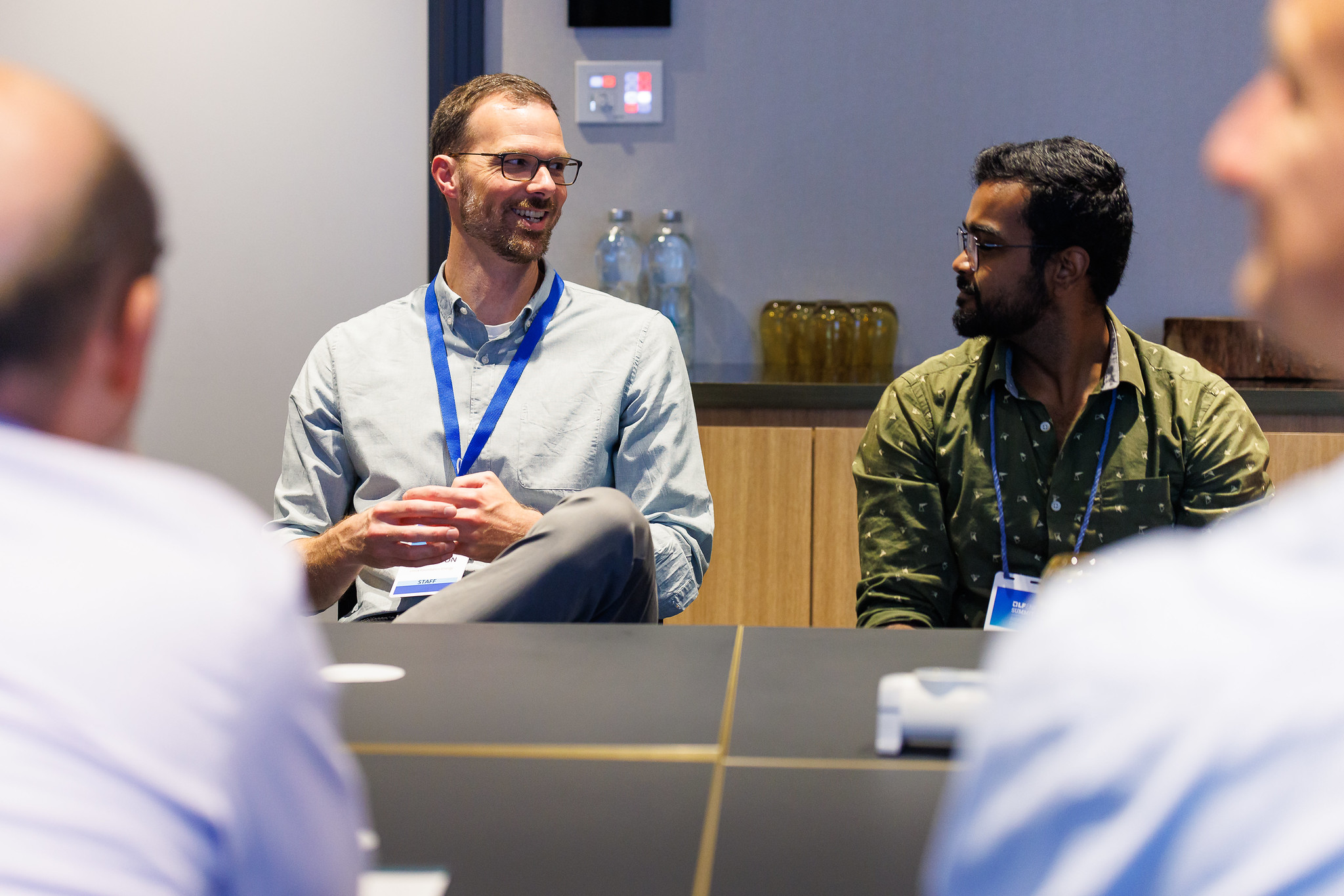 Alex Thornton first encountered LF Energy as a member representative. After Shuli’s passing, he was encouraged to step into the role of Executive Director. He has since reflected on the challenge of honoring Shuli’s legacy while helping the organization evolve. Under his leadership, LF Energy continued to expand its project portfolio, membership, and global footprint. What began as an experiment matured into a durable ecosystem supporting real‑world deployments across multiple regions.

”Of all the projects the Linux Foundation has hosted, LF Energy is the only one that began with someone knocking on the door. That tenacity defined everything that followed.
Mike DolanThe Linux Foundation

While LF Energy now hosts dozens of projects, its impact cannot be measured solely in repositories or deployments.
For many utilities, LF Energy provided a first practical introduction to open source as a strategic tool rather than a licensing model. It offered a way to collaborate with peers and vendors without losing control or credibility.
For vendors, it created opportunities to co‑develop shared foundations while differentiating through products and services built on top. For researchers and startups, it offered a path from experimentation to real‑world adoption.
Perhaps most importantly, LF Energy helped change conversations inside organizations. Open source became something legal teams, engineers, executives, and regulators could discuss using a shared vocabulary and shared examples.
Today under Alex’s leadership, LF Energy is supported by a diverse and growing global membership of nearly 75 organizations, and a broad portfolio of more than three dozen projects spanning the power system. Its summits and working groups bring together people who might never otherwise meet.
Yet the essence of LF Energy remains what it was at the beginning: a belief that collaboration, when done thoughtfully and openly, can help an industry tackle problems too large for any single organization to solve alone. Access to reliable, affordable, clean energy is a fundamental need for everyone on the planet, and open source can deliver it through collaboration, teamwork, and shared effort.
As the power sector continues to evolve, the LF Energy story is still being written. Each new contributor, each new project, and each new collaboration adds another chapter to how the LF Energy community is revolutionizing the energy industry, and with it, addressing global challenges like climate change and economic growth.
What began with a knock on a door has become a community built on persistence, trust, and a shared commitment to building the digital foundations of the grid together.

The LF Energy story is ultimately a collection of individual decisions to try something new. Below are snapshots from community members who helped shape the foundation through their participation.

Lucian Balea (RTE)
Lucian reflects on LF Energy as a human adventure as much as a technical one. From the earliest conversations with Shuli Goodman to the first summit in Edinburgh and formal incorporation, he saw LF Energy give utilities a credible way to collaborate openly while respecting regulatory constraints. For RTE, LF Energy made open source not just possible, but sustainable.
“The creation of LF Energy was above all a wonderful human adventure… you have to dare to think big for a noble purpose, start soon, fail-learn fast, and persevere in your convictions.”

Jeffrey Osier-Mixon (Red Hat)
Coming from outside the traditional energy world, Jeffrey saw LF Energy as a rare opportunity to apply proven open source ecosystem practices to a new industry. His experience highlighted how energy could learn from other sectors that had already navigated collaboration at scale, and how vendors could contribute without dominating.
“Shuli was very passionate about LF Energy, and its success is a testament to her dedication… I’m proud of my time with LF Energy and look forward to many more years of participation.”

Audrey Lee (Lyra Power Technologies)
For Audrey, LF Energy was always a labor of love, a firm belief that we could only solve the challenges of modernizing our grid and mitigating climate change by working together and collaborating.
“I first met Shuli in 2017 when she was sharing her vision for LF Energy around and getting input and feedback. I feel honored to have accompanied LF Energy on much of this journey. In 2020, Shuli invited me to be an Advisor to LF Energy and in 2021, I joined the Governing Board while I worked at Microsoft. I recall fondly visiting her home in Sebastopol or numerous video calls, especially during the pandemic, brainstorming what more we could do, what people and teams and companies we could bring together to solve energy problems.”

Arjan Stam (Alliander)
Arjan’s involvement was driven by urgency. Faced with accelerating congestion and demand growth, he concluded that Alliander could not build fast enough on its own. LF Energy provided the governance and peer network that made open collaboration viable, turning skepticism inside the organization into alignment.
“We needed accurate forecasts and the ability to estimate the state of the full grid per 15 minutes… LFE helped us instantiate successful projects: Power Grid Model and OpenSTEF.”

Tony Xiang (Alliander)
For Tony, LF Energy demonstrated how engineers across companies could co-develop high-quality software while still meeting operational requirements. His experience underscored how open collaboration improved not only code quality, but shared understanding of grid challenges.
“A defining milestone… was the Power Grid Model surpassing one million downloads… fueled by collaborative development, transparent governance, and a shared commitment to accelerating the energy transition.”

Maarten Mulder (Alliander)
Maarten points to LF Energy as a catalyst for cultural change. Participation shifted how teams approached transparency, documentation, and reuse, making collaboration with external partners a default rather than an exception.
“GXF earned the CII Best Practices Badge… validating its technical maturity and boosting confidence for utilities and developers seeking robust, open solutions.”

Jonas van den Bogaard (Alliander)
Jonas highlights the importance of community continuity. LF Energy provided a stable home where projects could outlive internal reorganizations and changing priorities, ensuring that shared investments continued to deliver value.
“By open sourcing critical tools, Alliander not only accelerated its own digital power system but also empowered a global community… demonstrating how open collaboration can drive scalable, interoperable solutions.”

Sander Jansen (Alliander)
Sander emphasizes the practical benefits of working in the open. By sharing early and often, teams identified issues sooner and avoided costly rework, reinforcing trust in the open source model.
“CoMPAS gained momentum as a reference implementation for IEC 61850-based substation automation… aligning development with real industry needs.”

Frank Kreuwel (Alliander)
Frank reflects on how LF Energy helped align long-term grid planning with modern software practices. The foundation bridged gaps between traditional engineering disciplines and digital teams.
“OpenSTEF’s acceptance into LF Energy and collaboration between Alliander and RTE marked a turning point… an example of open AI innovation in the energy sector.”

Nico Rikken (Alliander)
Nico describes LF Energy as a space where experimentation was encouraged but anchored in real operational needs. For him, the key milestone was seeing open source outputs move decisively into production contexts.
“In the LF Energy community I finally found people that understood the legal struggles of applying industry standards in open source projects… strengthening my trust that open source is fundamental to digitalisation and innovation.”

Peter Salemink (Alliander)
Peter describes LF Energy as a place where theoretical grid planning met operational reality. What started as an internal need at Alliander became, through LF Energy, a shared tool used by DSOs facing similar challenges across Europe. For Peter, the milestone was seeing utilities adopt a common modeling foundation instead of duplicating effort behind closed doors.
“As chair of the Power Grid Model project it is amazing to see the community grow… Proud to see the growing impact of LF Energy!”

Marco Möller (Pionix)
From a vendor perspective, Marco saw LF Energy lower the friction between utilities and suppliers. Shared foundations reduced integration overhead and allowed vendors to focus on differentiated value rather than bespoke plumbing.
“That spontaneous discussion marked the start of something much bigger… uniting industry and academia around a shared open source vision for the future of EV charging.”

Kwate Kwate Rodrigues (Hydro-Quebec)
Kwate highlights LF Energy’s inclusivity. As the community expanded, it created opportunities for contributors from different backgrounds to participate meaningfully in shaping the digital future of the grid.
“A key milestone was connecting Hydro-Québec’s digital transformation efforts with the broader LF Energy ecosystem… helping nurture the next generation of open source innovators driving the digital transformation of the electric grid.”
Together, these voices reflect the diversity of motivations and experiences that define LF Energy. While each story is distinct, they converge on a shared conclusion: collaboration in the open changed how participants work, and what they believe is possible.
What’s shipping across the LF Energy portfolio, who’s deploying it, and where the industry is heading — delivered roughly twice a month.

LF Energy is the Linux Foundation’s neutral home to build the digital foundation for energy through open source software, standards, and data.
Copyright The Linux Foundation and its contributors. | Trademarks | Privacy | Terms | Policies | Brand Guidelines