The name Hyphae is Greek for “web”. Hyphae is a fitting name for microgrid software that will enable the connection of buildings, homes, and energy-consuming devices to energy-producing devices like storage, EV batteries, and PV. At the core of the software is physical peer-to-peer (P2P) trading, much like what happens in a forest between trees.
Hyphae is the seed contribution or foundation for a suite of energy web services that will be able to meet the explosion in flexibly built nano, mini, and microgrids. Increasingly, microgrids play a vital role for the resiliency of existing utility grids. LF Hyphae also provides the bridge services to the main grid. On our roadmap, we plan to accomplish this via integration with LF Energy SOGNO, a project to create plug-and-play, cloud-native, micro-services to implement our next generation of data-driven monitoring and control systems.
As the world races to develop and build microgrids that are resilient and flexible, an open-source, automated microgrid controller and a physical peer-to-peer trading platform like Hyphae will allow for faster innovation while decreasing costs for everyone.
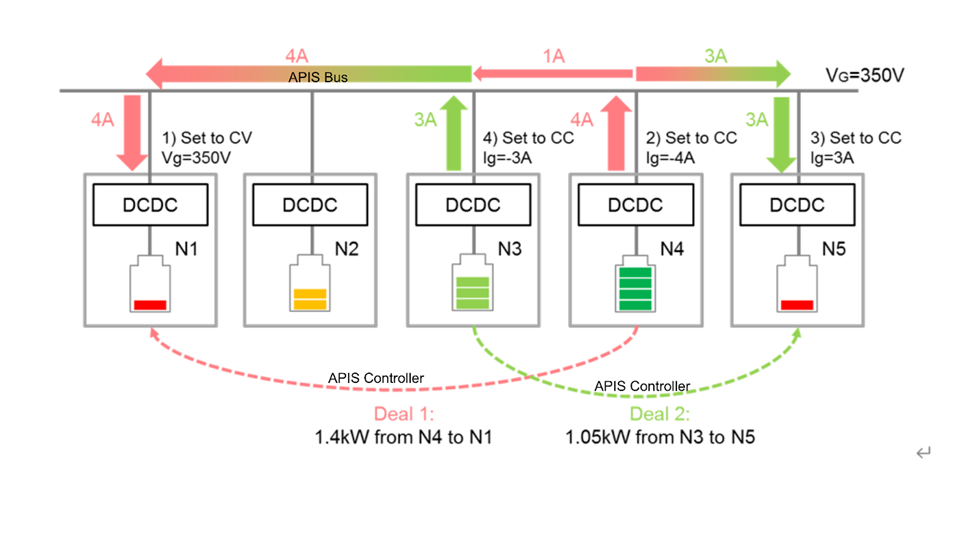
Current APIS features in Hyphae include:
- Flexible grid expansion: Because power interchange is autonomous, the microgrid can be expanded flexibly, without having to redesign the system from the ground up.
- Effective use of renewables: Because the physical peer-to-peer power interchange balances supply and demand between decentralized power generators and decentralized power storage equipment, it is possible to use renewable energy effectively despite fluctuations in the amount of power generated.
- Resilience: Because of these characteristics, it is possible to build a power system with high resilience.
Originally, APIS was contributed to the LF Hyphae program by Sony CSL. Now, the Hyphae microgrid project has expanded to provide:
- secure and deployable microgrid solutions
- additional automated microgrid controllers
- integration with other LF Energy projects like EVerest and OpenLEADR
- benchmarks and simulations for various microgrid scenarios
- Open source library of microgrid solutions that can be adopted by community microgrid projects worldwide.
Energy IoT Open Source is a non-profit organization that maintains the LF Hyphae roadmap and bridges the adoption of LF Hyphae technology via knowledge building programs and partnerships with micro-utilities projects sponsored by non-profit foundations.
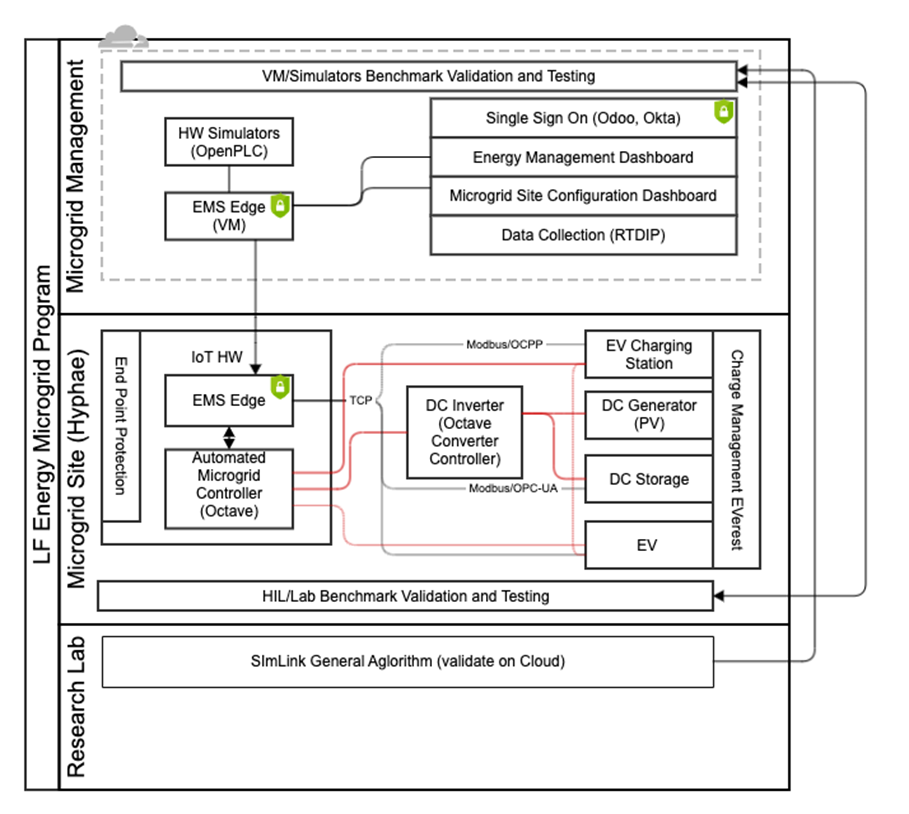
By working with other contributors, we would like to expand Hyphae to add features and functionality that will enable a flexible approach to microgrids. In particular, the Hyphae Technical Steering Committee (TSC) welcomes collaboration with hardware partners to ensure an entirely interoperable system.
The backstory of the name Hyphae (pronounced hai-fee)
Biologically, hyphae are white filament-like threads that serve as the transport and communication mechanism connecting and facilitating resources under the ground between fungi, plants, trees, and the many organisms that makeup forest ecosystems. We selected this name for the project as an acknowledgment that the grid of the future will not be a grid. Rather, it will be a vast interconnected network of energy supply and energy demand that benefits the sustainability of the whole. Much closer to a forest than to what we think of today as the “grid”. Like revitalizing a forest for consuming more CO2, growing microgrids will accelerate renewable energy supply.
By working with other contributors, we would like to expand Hyphae to add features and functionality that will enable a flexible approach to microgrids. In particular, the Hyphae Technical Steering Committee (TSC) welcomes collaboration with hardware partners to ensure an entirely interoperable system.
The backstory of the name Hyphae (pronounced hai-fee)
Biologically, hyphae are white filament-like threads that serve as the transport and communication mechanism connecting and facilitating resources under the ground between fungi, plants, trees, and the many organisms that makeup forest ecosystems. We selected this name for the project as an acknowledgment that the grid of the future will not be a grid. Rather, it will be a vast interconnected network of energy supply and energy demand that benefits the sustainability of the whole. Much closer to a forest than to what we think of today as the “grid”. Like revitalizing a forest for consuming more CO2, growing microgrids will accelerate renewable energy supply.






Hyphae Project: Goals and Directions - Kotaro Jinushi & Daisuke Kawamoto, Sony Computer Science Lab
April 21, 2021 2:54 pm